
All Posts
Guide
What to Bring to Your First Surf Lesson
You've booked your first surf lesson, but you're not sure what to bring? Nine things that fit in a small backpack you can prepare the night before.
You've signed up for your first surf lesson, but you're not sure what to bring?
Don't worry. Here's everything you need to know so that you get to your first surf lesson able to focus on learning instead of regretting what you forgot to bring.
One of the best things about surfing somewhere tropical like San Blas is that it takes very little gear.
The specialized equipment — the surfboard, the leash and the wax — is provided, or should be provided, by the surf school. Beyond that, the one essential is a bathing suit that holds up in the waves.
But to make sure your surf lesson is a good experience, here are the things that will make it more comfortable.
What you don't need is a wetsuit, which is the first thing people ask about when they come from a cold climate or have surfed in cold water before.
It's an advantage that you don't need much. But it does matter that you bring the right things, because they're small items that get sorted out the night before and that you're glad to have in the water.
What you need to bring
Your lesson is booked, you have the day and the time, and you know where to meet. Here are the nine things worth bringing.
- Snug bathing suit
- Sun-protection rash guard
- Leggings for sensitive skin
- Hat with a chin strap
- Towel
- Water
- Sunscreen
- Sandals
- Light snack
The bathing suit
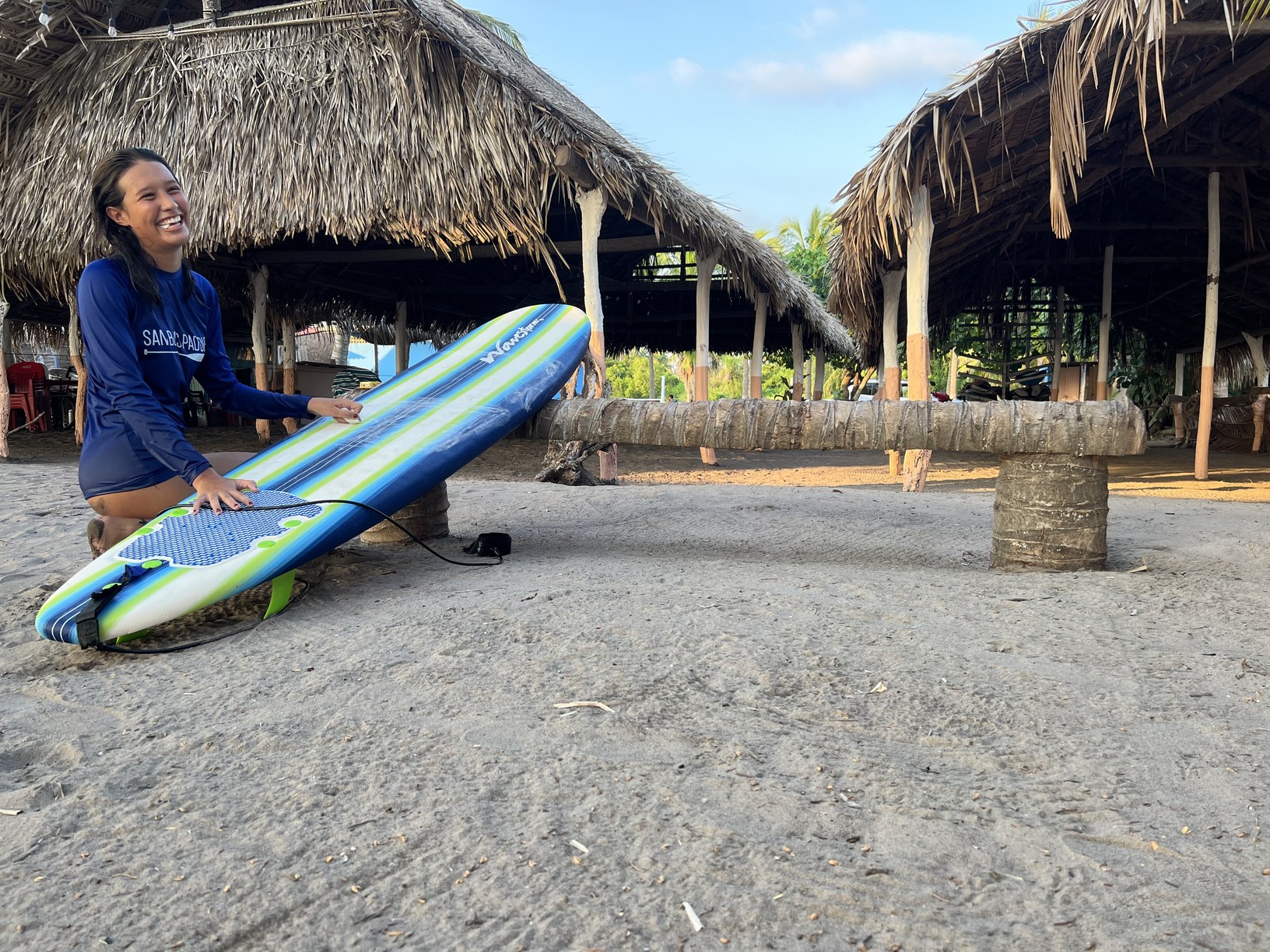
The bathing suit is the only thing you need to have on before you leave the house.
For men, board shorts that sit snug at the waist and won't come down with the movement or the impact of a wave.
For women, a one-piece is the best option. If you wear a bikini, it needs to be one that stays in place when a wave hits you or when you fall.
It sounds like a small detail. But in two hours in the water you fall many times, and anything that shifts around ends up stealing your attention.
The rash guard and the leggings
A rash guard is a long-sleeve or short-sleeve top. Women wear it over the bathing suit.
It does two things: it protects you from the sun for the whole lesson, and it keeps the board from rubbing your chest and your arms raw.
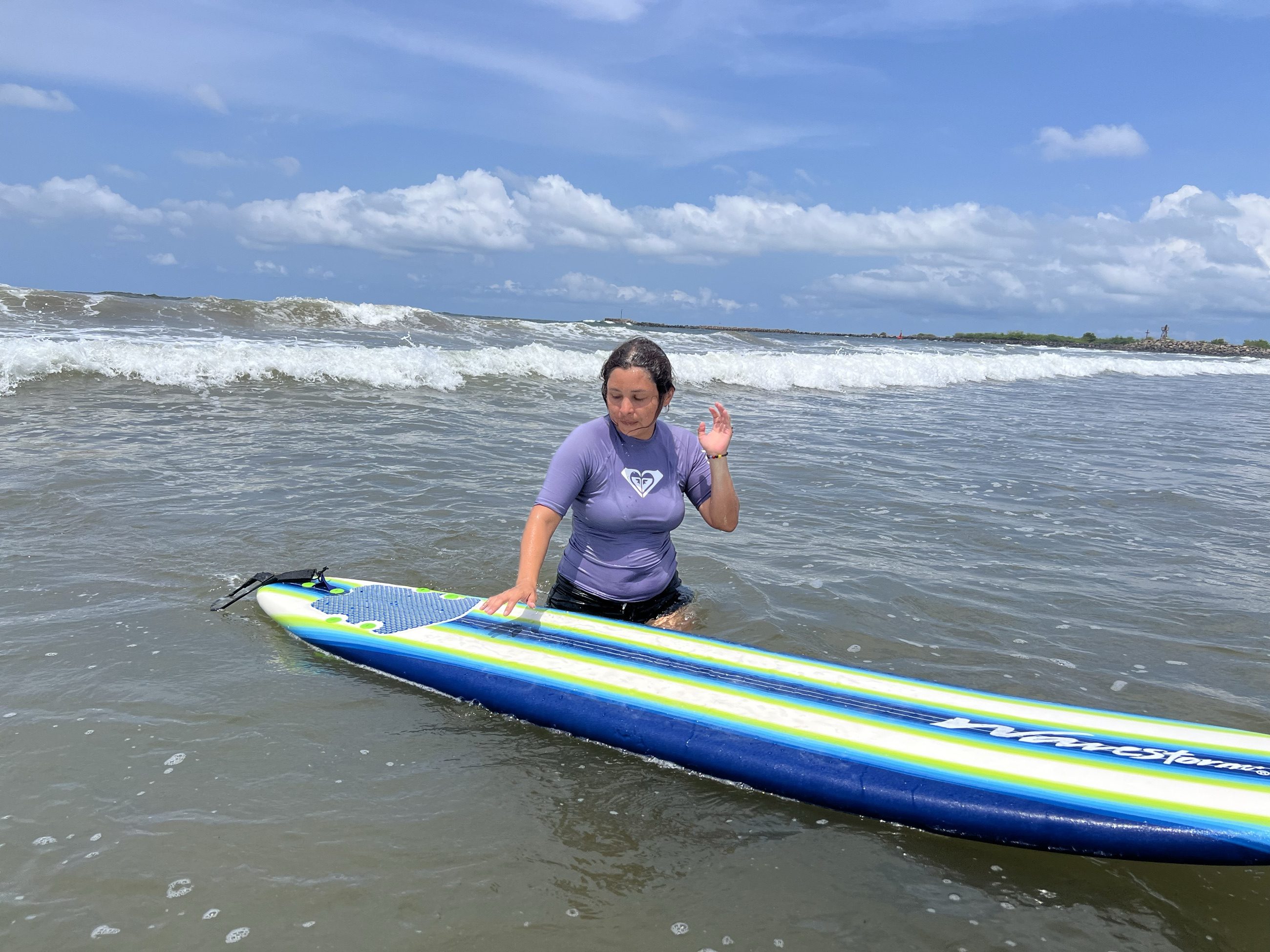
Surf schools often provide rash guards, so check with your instructor before your lesson.
The leggings do the same thing from the waist down. If you have sensitive skin, they help you avoid rash on your knees and your legs, which is where the board makes the most contact while you're learning.
The hat
The most practical option is a hat with a clip or a cord so you can tighten it under your chin.
That way you don't lose it in a fall or when a wave catches up with you.
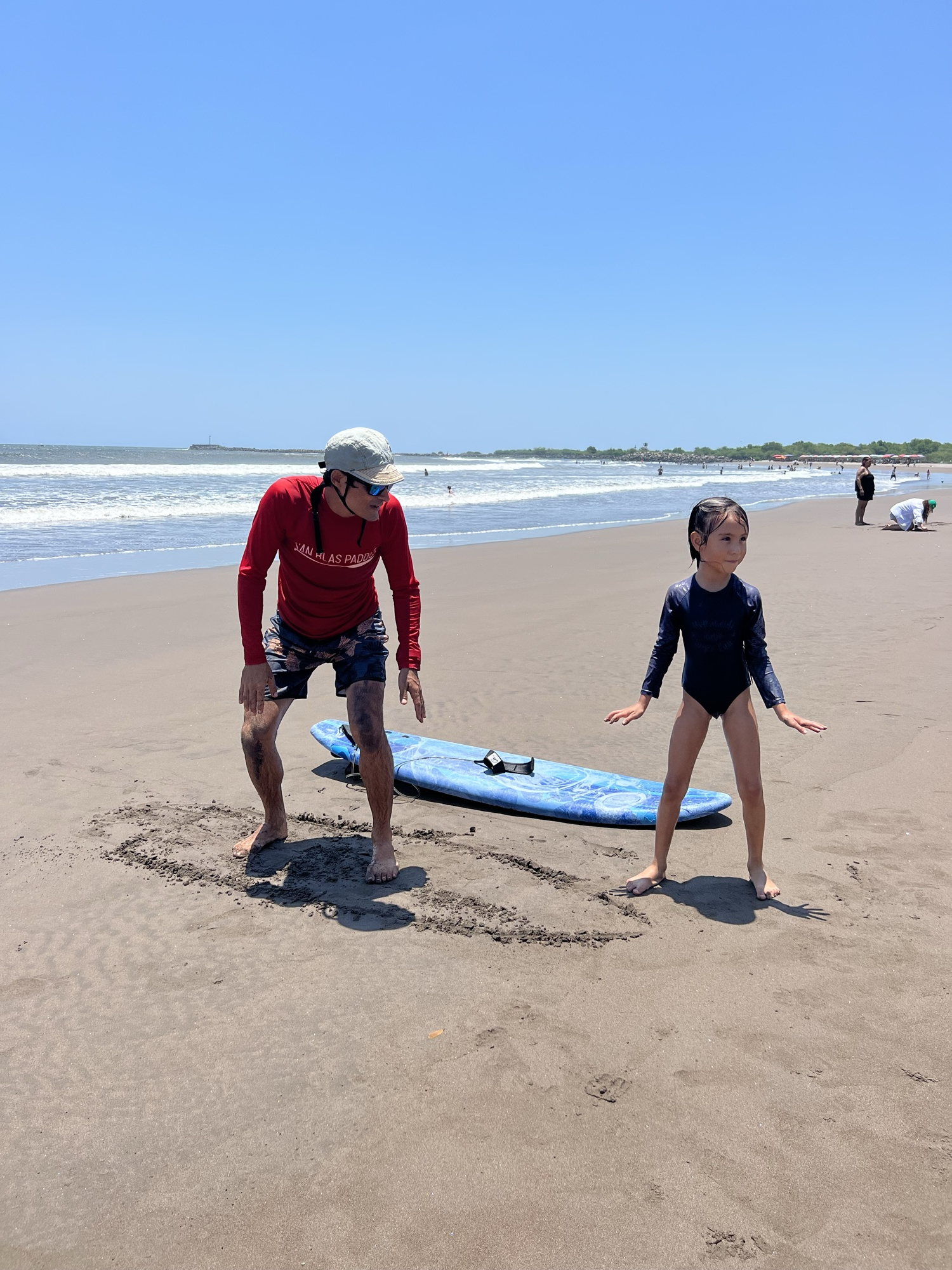
It's better if it isn't too big: a long brim blocks your view right when you need to be looking ahead. What you want from it is a bit of shade on your face while you're getting instruction or waiting for your waves.
The rest goes in your backpack
Everything else fits in a small backpack: a towel, water, sunscreen and sandals.
It's best to put the sunscreen on before you get to the beach, so it has time to absorb and doesn't wash off with the first wave. The sandals are for the sand, which is already hot by mid-morning.
The face sunscreen I recommend is Pasta de Lassar Andrómaco with zinc oxide (25%). You can get it at the pharmacy (farmacia Guadalajara) in San Blas and it gives your face the best protection. Heads up: it doesn't absorb, it goes on as a layer, so don't be alarmed if you look very pale ;)
A light snack is worth bringing too, a piece of fruit or something that gives you a bit of sugar during the lesson. The Single-Day Surf Lesson runs two hours, and it's common to finish hungrier than you expected.
What the surf school provides
The school provides the right board for learning, the leash (the cord that attaches the board to your ankle) and the wax that gives the deck its grip. Often it provides the rash guard as well, but it's better to ask before your lesson.
A beginner's board should be quite a bit bigger and more buoyant than the one someone with experience uses. The board's flotation gives you the stability you need to balance on it in the different positions, and it lets you paddle to catch your first waves.
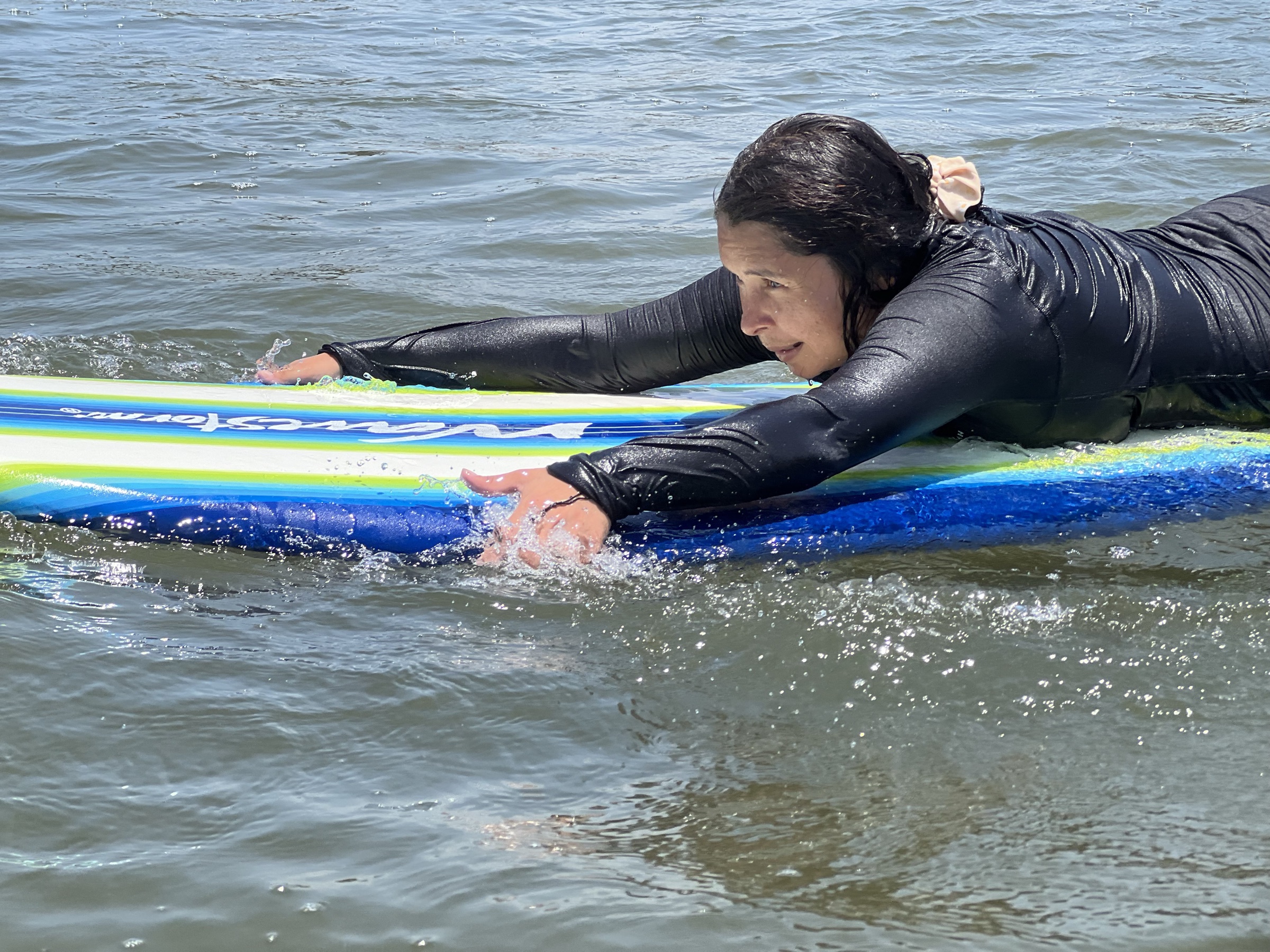
Your first surf lesson with Sandbar Surf School
The meeting point and the time are set according to the surf forecast and ocean conditions, and your instructor should confirm both at least a day ahead.
Beyond that, getting ready for your first surf lesson is a small backpack and five minutes the night before. The rest you learn on the beach.