
All Posts
Guide
Mosquitoes and no-see-ums in San Blas
San Blas has some kind of biting bug all year round. Which one you get depends on the month, the time of day, and the phase of the moon.
If there's one thing that San Blas is known for, it's the mosquitoes and no-see-ums (jejenes).
Because of where San Blas sits, we have the fortune, or the misfortune, of having some kind of biting bug all year round.
What changes with the month, with the hour and even with the moon is which of the two you'll run into.
When are there no-see-ums and mosquitoes in San Blas?
November through May can be considered no-see-um season, and June through October is when the mosquito is most likely to dominate.
No-see-ums prevail in the dry season. When the rains start is when there are more mosquitoes.
Both seasons can shift a little.
The no-see-um and mosquito calendar
Here's the full year: which one dominates in each half, why, and where it concentrates.
| Months | Dominant | Season | Where it concentrates |
|---|---|---|---|
| November to May | The no-see-um | Dry | The beaches, where it breeds in the sand, and near the estuary areas |
| June to October | The mosquito | Rains | Wetlands, mangroves, estuaries and scrub |
The hours they bite
Both of them, no-see-ums and mosquitoes, are most commonly found early in the morning and around sunset.
The usual hours are 7am to 10am, and 5pm to 8pm.
Those are the two windows worth keeping in mind when you plan your day.
The full moon and the new moon
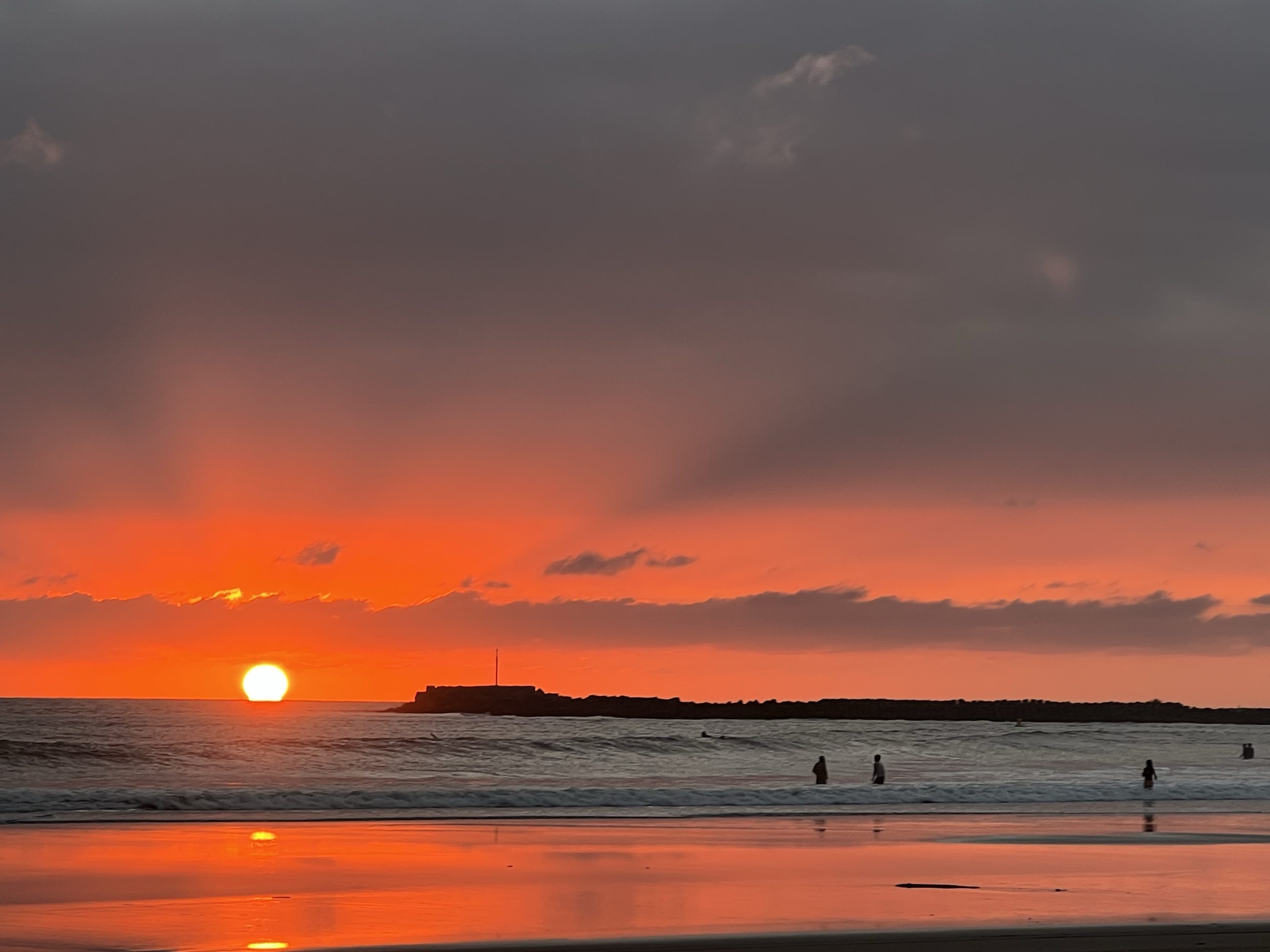
The no-see-um follows the cycle of the moon.
During the full and new moons is when you'll find the most no-see-ums.
Checking the phase of the moon before you come is one detail that really does pay off in San Blas. Or simply being aware of the phase of the moon and planning accordingly.
Where there are more no-see-ums and more mosquitoes
The no-see-um breeds in the sand, so it's most common to find it on the beaches or near them, and also near the estuary area.
The mosquito is more prevalent around the wetlands, the mangroves, the estuaries and the scrub.
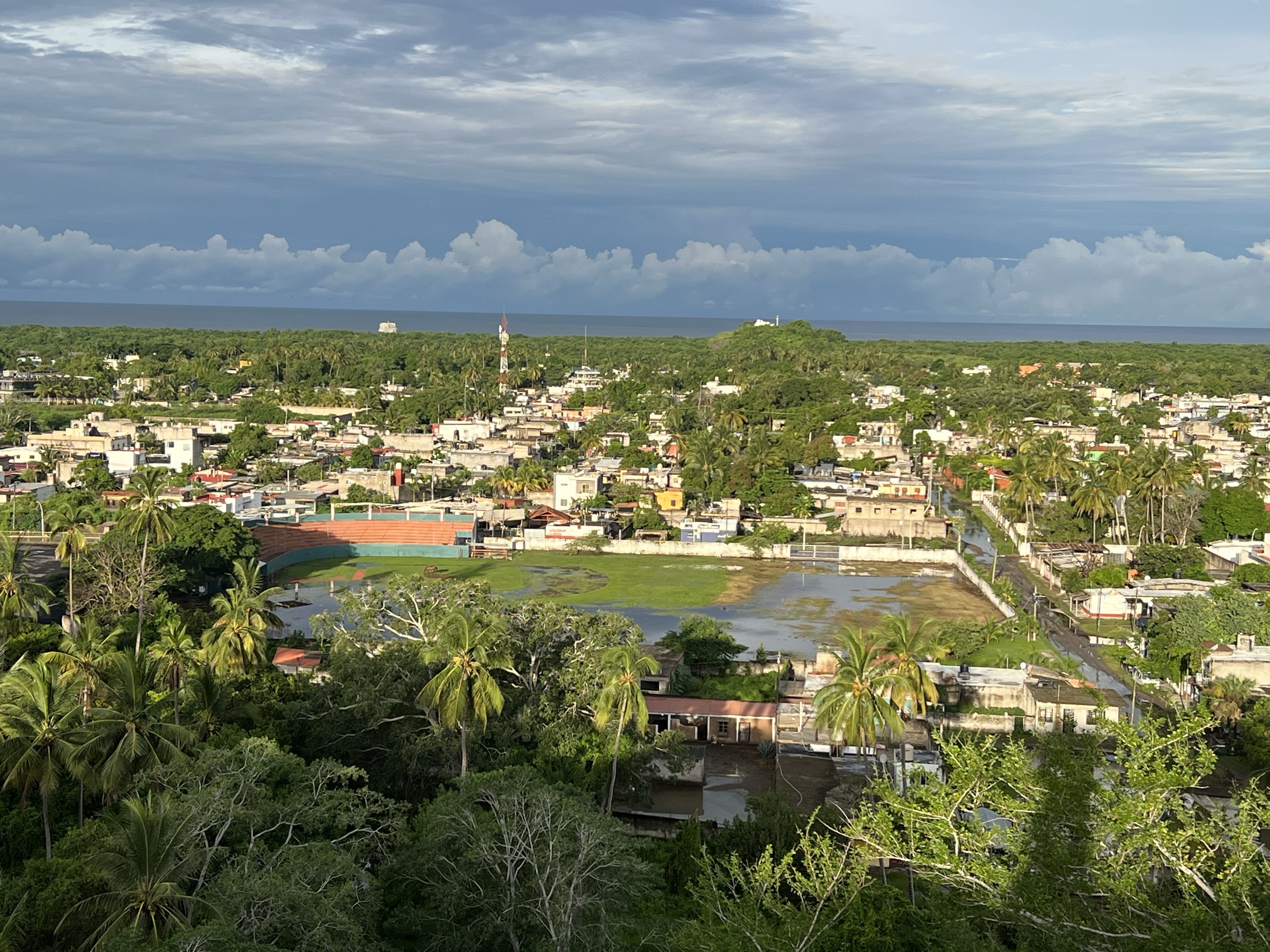
Generally speaking, anywhere in the low, wetland zone you'll find plenty of no-see-ums and plenty of mosquitoes. That covers San Blas, Matanchen Bay and the northern part of the municipality. On the south side things change as the elevation rises, past Aticama and Los Cocos.
These are the areas with the heaviest presence:
- playa Las Islitas
- the beach at Matanchen Bay
- playa El Borrego
- the fort
- Playa del Rey
And the estuary areas, which have plenty of both:
- the port grounds
- the San Blas pier
- the fisherman's wharf
- estuary El Pozo
- estuary San Cristobal
The fisherman's wharf is where the pangas anchor and where the warehouses that store the fish and the shellfish are. You can go take a look and buy fish there. Because it sits on the estuary, it's also one of the areas with a lot of no-see-ums and mosquitoes.
On the south side of the bay the presence drops, and these are the three:
- Aticama
- Los Cocos
- Santa Cruz
All three have fewer no-see-ums and fewer mosquitoes than playa Las Islitas, than the beach at Matanchen Bay, and than the estuary areas in general. It's the side where the elevation starts to climb.
The wind at playa El Borrego
One very marked difference between playa El Borrego and the bay is the wind.
At playa El Borrego there's usually wind from 11am until 5pm.
That wind hits the beach head-on and helps neutralize the presence and the discomfort of the no-see-um.
On the bay side, particularly at playa Las Islitas, you don't feel that wind, which is why it's more common to feel the no-see-um through the course of the day and the afternoon.
Choosing your beach by the wind is the simplest way to spend the day without thinking about no-see-ums.
Sun and shade
Another factor is shade.
In the shade you'll run into more no-see-ums. In the sun you feel them less.
The town and the plaza
In the town center, in the most built-up part, you'll find fewer no-see-ums and fewer mosquitoes than at the beach.
But on the most intense days, particularly for no-see-ums, you can run into them even in the plaza.
It's always a possibility, depending on the conditions of the moon and of the rains.
How to protect yourself
The first thing is to avoid the areas with the heaviest presence at the peak hours.
Sometimes that isn't possible. Birdwatching, for example, happens very early in the morning and in areas with heavy vegetation, which is exactly where and when there are the most of them.
If you're going to do activities that take you into nature at those hours, the best thing is to wear the right clothing:
- long pants
- a long-sleeve shirt
- a hat with a face net, if you're going into areas with heavy vegetation
The idea is to leave no skin exposed.
Repellent
Of the most recommended repellents, the one that's been most effective is OFF! Deep Woods Sportsmen, the liquid one, the one in the green bottle.
After that one, Autan.
There's also a locally made repellent, the Andra repellent.
Any repellent has a limited effective time, so you do need to reapply it.
It's also important that it doesn't give you a skin reaction. If you already have a repellent you prefer, the best thing is to use that one.
At the end of the day, no repellent is going to give you 100% protection.
Bring your own
Come prepared with your repellent.
Repellent is sold here in San Blas, but it's worth bringing at least one so you don't end up needing it urgently with nowhere nearby selling it.
The no-see-um, the mosquito and the shrimp
No-see-ums and mosquitoes can be a nuisance, and for anyone looking for total calm and comfort they can be a reason not to come.
Both, the mosquito and the no-see-um, are a food source for estuarine shrimp and fish that are found locally.
They're an important part of the ecosystem that brings a lot of people to spend a few days in San Blas: to eat fresh fish and shellfish.
Without the no-see-um and without the mosquito we wouldn't have the quantity or the conditions for that food to develop here.
Putting up with a couple of bites is part of the deal with a place that still works this way.
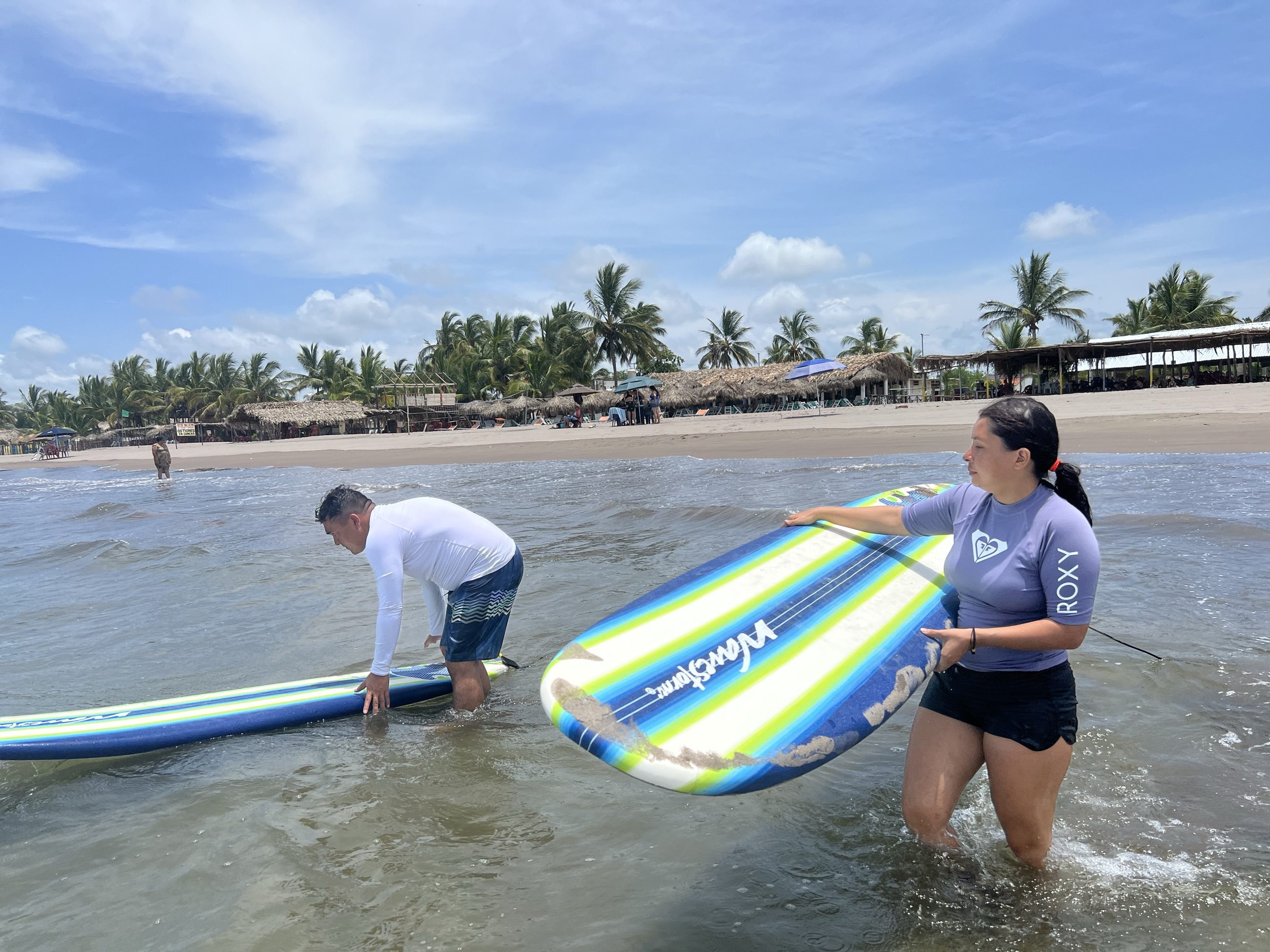
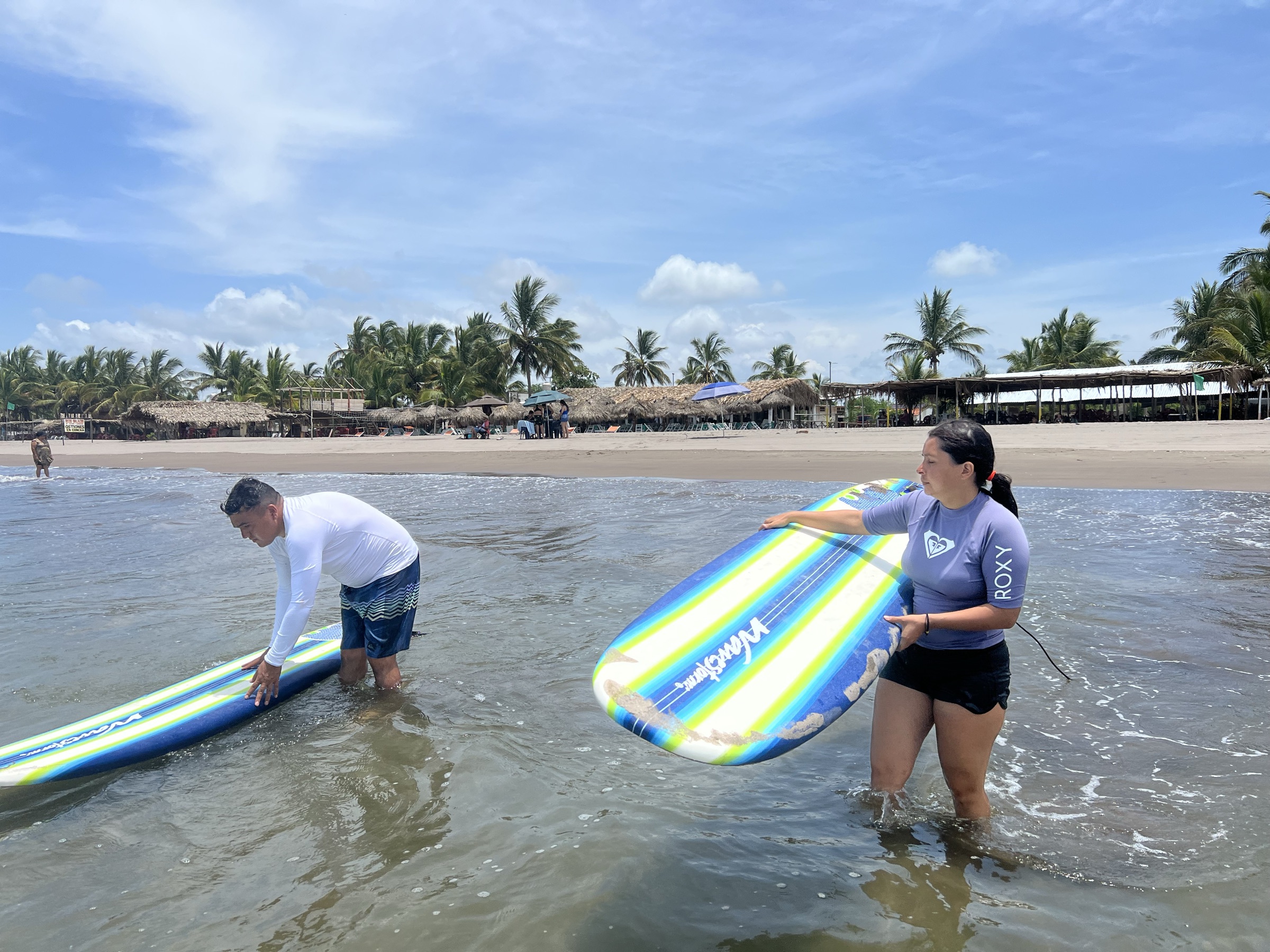
If you're coming to take surf lessons
We recommend you always show up with your sunscreen and your repellent.
At playa El Borrego you'll probably feel few no-see-ums or mosquitoes, because of the combination of the sun and the wind.
That head-on wind and the sun are the two conditions the no-see-um likes least.
If you have any questions, don't hesitate to contact us.